
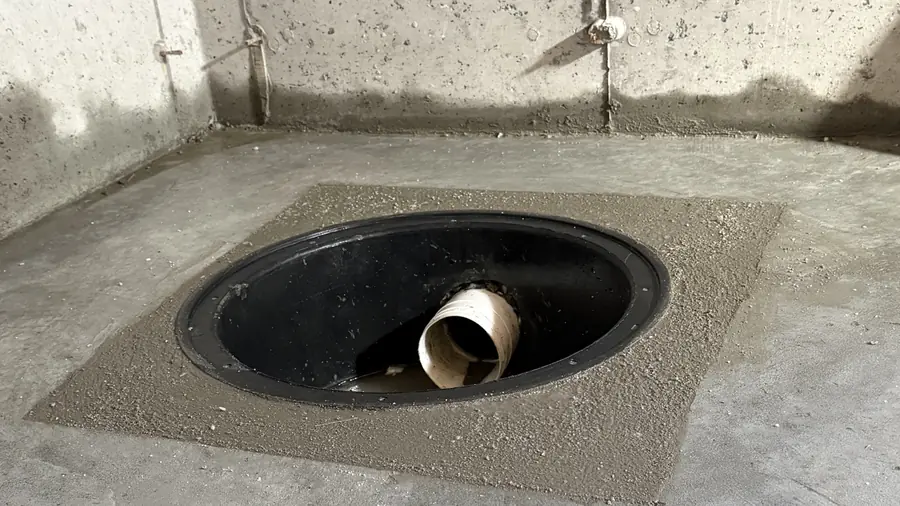
Sump pump installation
Sump Pump Installation for Wet Basements
Sump pump installation for basements that take on water: a sealed basin, a pump with a check valve, a high-water alarm, a battery backup, and a discharge line run outside and away from the foundation, for homes across Central Massachusetts, MetroWest, and Greater Boston.
- Free Estimates, No Obligation
- Insured
- Registered Massachusetts Corporation
- 4+ Years of Excavation Experience
- References Available
The scope
What Our Sump Pump Installation Includes
Sump pump installation gives the water under and around a basement one place to collect and one way out. We set a basin into the floor where the drains can reach it, install the pump and its controls, and run the discharge line outside, so the water leaves the house before it rises onto the floor.
- A sump basin set into the basement floor, with a sealed lid
- A submersible pump with a float switch that starts it on its own
- A check valve so pumped water does not fall back into the basin
- A discharge line run outside and away from the foundation
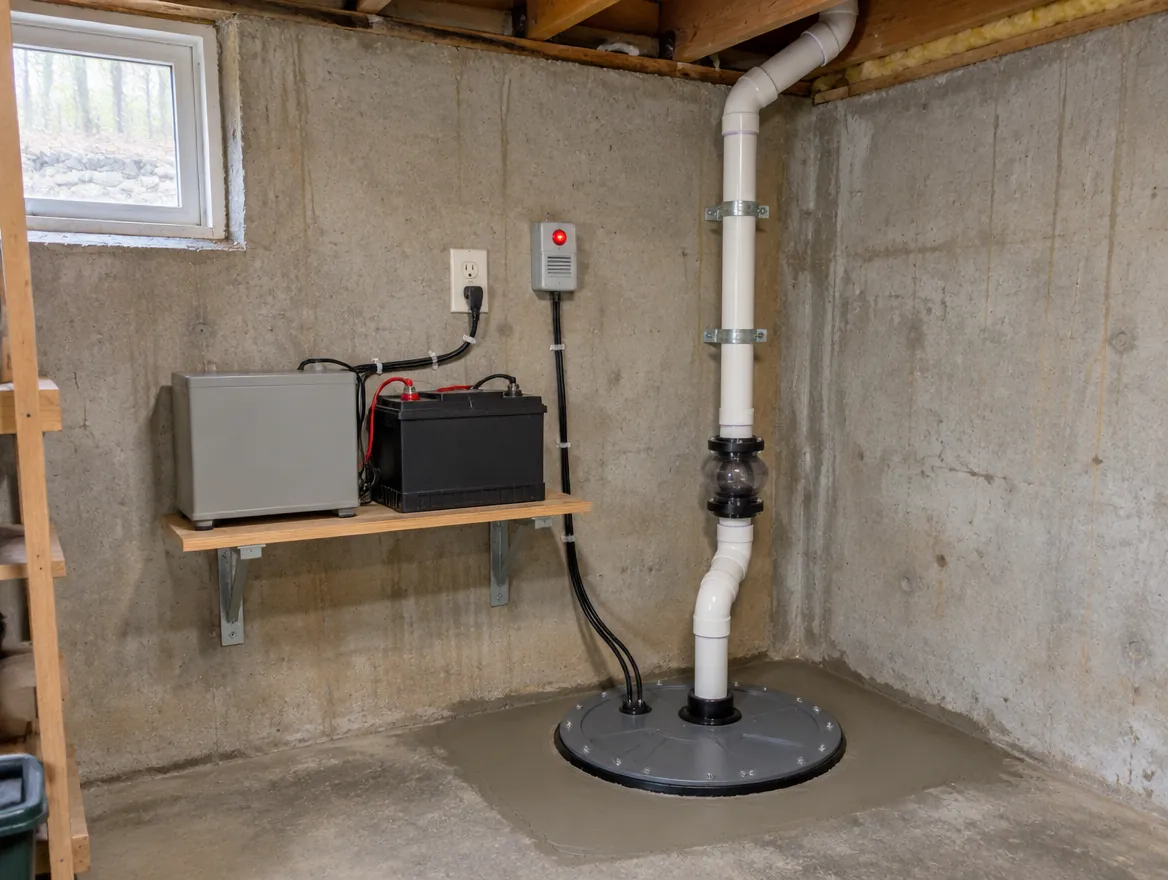
- A high-water alarm and a battery backup pump
Many basements need more than a pump. The basin is fed by an interior drain along the walls or by foundation drainage outside, and some homes are better served by basement waterproofing from the outside first. We look at the whole picture before recommending one piece of it.
What to look for
Signs Your Basement Needs a Sump Pump
A basement rarely floods without warning. Most homes show smaller signs first, often in the same season every year, and those signs point to where the water is coming from. These are the ones homeowners describe most often when they call us about a sump pump, usually after a heavy rain or a spring thaw.
- Water where the basement wall meets the floor
- Puddles on the floor after a heavy rain or snowmelt
- A basement that turns damp every March and April
- A musty smell, or a white powder on the walls
- An old pump that runs all the time or has stopped working
Not every wet basement needs a pump. If water comes in only during storms on one side of the house, the cause may be downspouts or ground that slopes toward the foundation, and drainage solutions fix that from the outside. We check both before recommending a sump pump.
Soil and groundwater
Where the Water Comes From in Central Massachusetts
Much of the region sits on glacial till: soil and stones over a dense, compacted layer that water moves through slowly. The Paxton series, the official state soil of Massachusetts, was first described in Worcester County and forms in this kind of dense till, on hills, drumlins, and till plains.
The official USDA description of that soil notes that water may perch on the dense layer from late fall through early spring. Rain and snowmelt soak through the top layer, stop on the hardpan, and run sideways until they reach a basement wall, which is why so many basements leak where the wall meets the floor. The U.S. Geological Survey adds that the water table in Massachusetts most often peaks in March and April, and names a high water table as a major cause of wet basements. A sump gives that water somewhere to go.
The parts
What Goes Into a Sump Pump System
A sump pump system is several parts that have to work together, and a weak link in any one of them is how a basement floods with a pump already in place. These are the parts we install and why each one is there, from the basin in the floor to the end of the line outside.
- 01
Sump Basin
A liner set into the floor, bedded in crushed stone, where the drains deliver the water.
- 02
Pump and Float Switch
A submersible pump that starts on its own when the water lifts the float.
- 03
Check Valve
A valve on the discharge pipe that keeps pumped water from running back down.
- 04
Sealed Lid
An airtight cover that keeps debris out and holds back moisture and soil gases.
- 05
Discharge Line
A pitched pipe that carries the water outside and away from the walls.
When the power goes out
Battery Backups and High-Water Alarms
The heaviest rain is often when the power fails, and a pump without power cannot move any water. The Building Science Corporation recommends a battery backup on every sump for that reason. A backup pump sits in the same basin and takes over when the main pump stops or cannot keep up.
- A battery backup pump that runs when the power is out
- A high-water alarm that sounds before water reaches the floor
- A basin set level and flush with the floor, with a sealed lid
- A test of both pumps with water before we leave
If the pump location needs a new outlet or circuit, that is electrical work for an electrician, and we point it out at the estimate. We work with partners on the parts of a project that are outside our own work, and the estimate shows who handles each part before anything starts.
The outlet
Where the Discharge Goes, and Where It Cannot
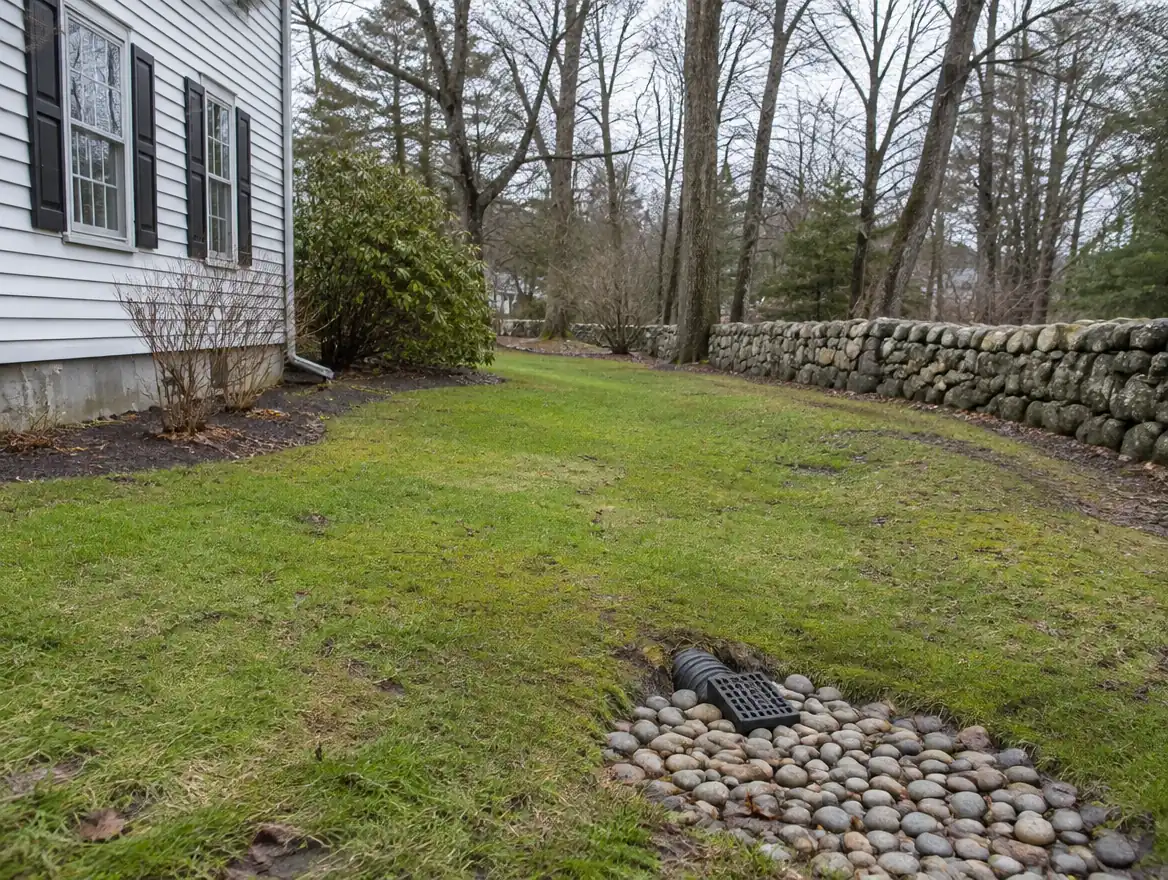
A sump pump only solves the problem if the water it pumps does not come right back. The discharge line runs outside with a steady pitch and ends far enough from the foundation that the water soaks into the yard or follows the grade away from the house, never toward a neighbor's property.
In Massachusetts, a sump pump cannot be connected to the sewer. The state code, at 248 CMR 10.17(2), says that storm water shall not be drained into sewers intended for sewage only, and many towns repeat that rule in their own sewer regulations. In winter, the end of the line has to stay open so it does not freeze shut, so we plan the route and the outlet with frost in mind, often together with drainage solutions such as a buried line or regrading at the outlet.
Our process
How a Sump Pump Installation Project Runs
A sump pump installation starts with finding the water, not with choosing the pump. We look at where and when the basement gets wet, where the drains can reach a basin, and where the discharge can go outside. Then we plan the basin, the drains that feed it, and the outlet together, as one system.
- 1
Site Visit
We look at the basement, the walls, the yard, and where water collects.
- 2
Written Plan
The estimate lists the basin, pumps, alarm, drains, and outlet.
- 3
Install
We set the basin, connect the drains, install the pumps, and run the line.
- 4
Test and Clean Up
We run water through the system, check the alarm, and clean up.
Before we start
Permits, Dig Safe, and Who Handles Each Part
A sump pump project can touch more than one set of rules: digging outside for the discharge line, cutting into the basement floor, and sometimes electrical work. We go over which permits the project needs, and the written estimate states who is responsible for each one, so nothing is left for the week of the job.
- A Dig Safe request before we dig outside, with the markings confirmed on site
- Any permit the town requires, listed in the estimate with who handles it
- An outlet location for the discharge line, away from neighbors
- A new outlet or circuit, when needed, handled by an electrician
- Clear access to the basement and to the area around the basin
Imperial Excavations and Constructions Corp is a registered Massachusetts corporation and carries general liability insurance and workers' compensation coverage. A certificate of insurance is available on request, and so are references from past customers, so you can check both before any equipment reaches the property.
Where we work
Sump Pump Installation in 88 Massachusetts Towns
We offer sump pump installation in eighty-eight towns and cities across Central Massachusetts, MetroWest, and Greater Boston, in Worcester, Middlesex, and Norfolk Counties, working out of our base in Milford. Hillside lots on dense till and low ground near rivers both send water toward basements, most of all in spring.
- Acton
- Ashburnham
- Ashland
- Athol
- Auburn
- Avon
- Barre
- Bedford
- Bellingham
- Berlin
- Boylston
- Braintree
- Brookfield
- Brookline
- Canton
- Charlton
- Clinton
- Cohasset
- Dedham
- Douglas
- Dover
- Dudley
- East Brookfield
- Fitchburg
- Foxborough
- Framingham
- Franklin
- Gardner
- Grafton
- Harvard
- Holbrook
- Holden
- Holliston
- Hopedale
- Hopkinton
- Hubbardston
- Hudson
- Lancaster
- Leicester
- Leominster
- Lowell
- Lunenburg
- Medfield
- Medway
- Mendon
- Milford
- Millbury
- Millis
- Milton
- Natick
- Needham
- New Braintree
- Norfolk
- North Brookfield
- Northborough
- Northbridge
- Norwood
- Oakham
- Oxford
- Paxton
- Plainville
- Princeton
- Quincy
- Randolph
- Rutland
- Sharon
- Shrewsbury
- Southborough
- Southbridge
- Spencer
- Sterling
- Stoughton
- Sturbridge
- Sutton
- Uxbridge
- Waltham
- Warren
- Webster
- Wellesley
- West Boylston
- West Brookfield
- Westborough
- Westminster
- Westwood
- Weymouth
- Winchendon
- Worcester
- Wrentham
Free estimate
Get a Free Sump Pump Installation Estimate
Tell us when your basement gets wet and where you see the water, and send photos from the last storm if you have them. We will look at the basement and the yard, find where the water comes from, and send a written estimate for the sump pump system, with no cost and no obligation.
- Free Estimates, No Obligation
- Insured
- Registered Massachusetts Corporation
- 4+ Years of Excavation Experience
- References Available
Prefer to talk? Call (508) 500-6598
FAQ
Sump Pump Installation Questions and Answers
These are the questions property owners and builders ask most often about sump pump installation before they hire an excavation contractor in Central Massachusetts: when you need one, backups, the discharge, permits, and cost. If your question is not listed here, send it with your estimate request and we will answer it before any work is scheduled.
Do I need a sump pump in my basement?
You may need one if water comes up where the wall meets the floor, if the basement turns wet every spring, or if the foundation drains have no outlet that works by gravity. On some sloped lots, a drain can run downhill to open ground and no pump is needed. We look at the basement and the lot before recommending a sump pump.
What does your sump pump installation include?
Our sump pump installation covers the sump basin set into the floor, a submersible pump with a float switch, a check valve, a sealed lid, the discharge line run outside, a high-water alarm, and a battery backup pump. When the basin needs drains to feed it, the estimate includes them. Every part is listed in writing before the work starts.
Can a sump pump drain into the sewer?
No. Massachusetts does not allow storm water and groundwater to be drained into sewers intended for sewage only, under the state code at 248 CMR 10.17(2), and many towns repeat that rule in their own sewer regulations. A sump pump has to discharge outside instead, onto the property and away from the foundation, and never onto a neighbor's land.
Where does the water from the sump pump go?
The discharge line carries the water outside and ends far enough from the foundation that the water soaks into the yard or follows the grade away from the house. The line is pitched so it drains between cycles, and the outlet is placed so it does not freeze shut in winter or send the water onto a neighbor's property.
Do I need a battery backup sump pump?
We recommend one. Power often goes out during the heavy storms when the pump is needed most, and the Building Science Corporation recommends a battery backup on every sump for that reason. A backup pump sits in the same basin, takes over when the main pump loses power or cannot keep up, and works well together with a high-water alarm.
Do you install the electrical outlet for the pump?
No. If the pump location needs a new outlet or circuit, that is electrical work for an electrician, and we point it out at the estimate. Many basements already have an outlet near the sump location. When a new one is needed, the estimate shows it as separate work, so the electrician can be scheduled before the pump goes in.
Is a permit required for a sump pump in Massachusetts?
It depends on the town and on the work. Digging outside, cutting the basement floor, and any electrical work can each fall under a different rule. We go over which permits the project needs, and the written estimate states who is responsible for each one. When we dig outside for the discharge line, a Dig Safe request comes first.
Is it normal to have water in the sump pit?
Yes. A basin usually holds some water below the level where the float starts the pump. What is not normal is a pump that turns on and off all the time in dry weather, runs without stopping, or lets the water rise above the float. Those signs point to a stuck float, a failed check valve, or more water than the system was built to handle.
How much does sump pump installation cost?
The cost depends on whether there is already a basin, how much of the floor has to be opened, whether drains are needed to feed it, the pump and backup you choose, and the length and route of the discharge line. We look at the basement and the yard in person and send a free, no-obligation estimate that lists each part.