
Land clearing
Land Clearing for Building Lots and Construction Sites
Land clearing that removes brush, trees, stumps, and debris and opens a property for excavation and construction, on residential lots and commercial sites across Central Massachusetts, MetroWest, and Greater Boston.
- Free Estimates, No Obligation
- Insured
- Registered Massachusetts Corporation
- 4+ Years of Excavation Experience
- References Available
The scope
What Our Land Clearing Includes
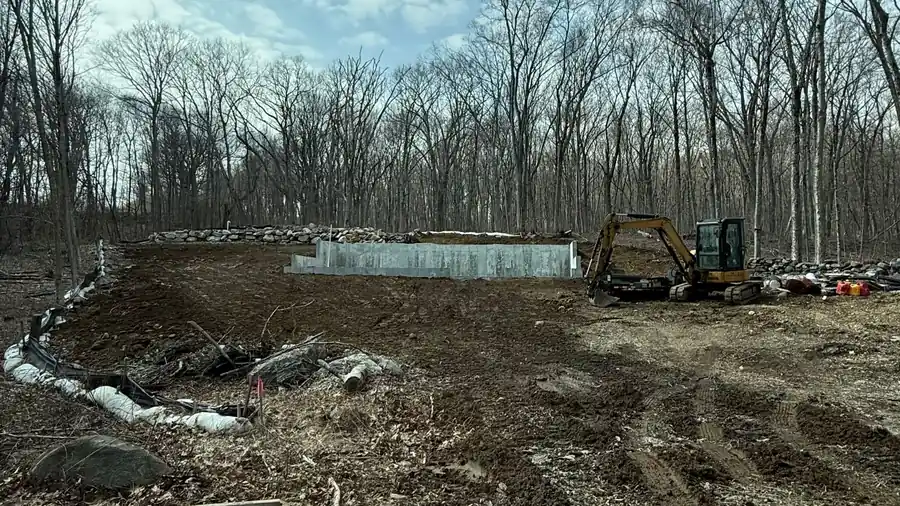
Land clearing removes what stands between a property and the project planned for it: dense brush, trees, stumps, rocks, and debris. The goal is not to scrape the lot bare, but to open the areas that the building, the driveway, the utilities, and the equipment need, and to leave the rest of the property protected.
- Lot clearing of the building area, driveway, and work zones
- Brush removal where dense growth blocks access
- Tree clearing for trees in the way of construction
- Stump and root removal where the ground will be excavated
- Removal of debris, old fencing, and loose rock from the site
Clearing is usually the first step of a project, followed by residential excavation or foundation excavation. When the same crew does all of them, the stumps, roots, and soil are dealt with once, and the cleared lot moves straight into the next stage.
Five kinds of clearing
Land Clearing Services We Provide
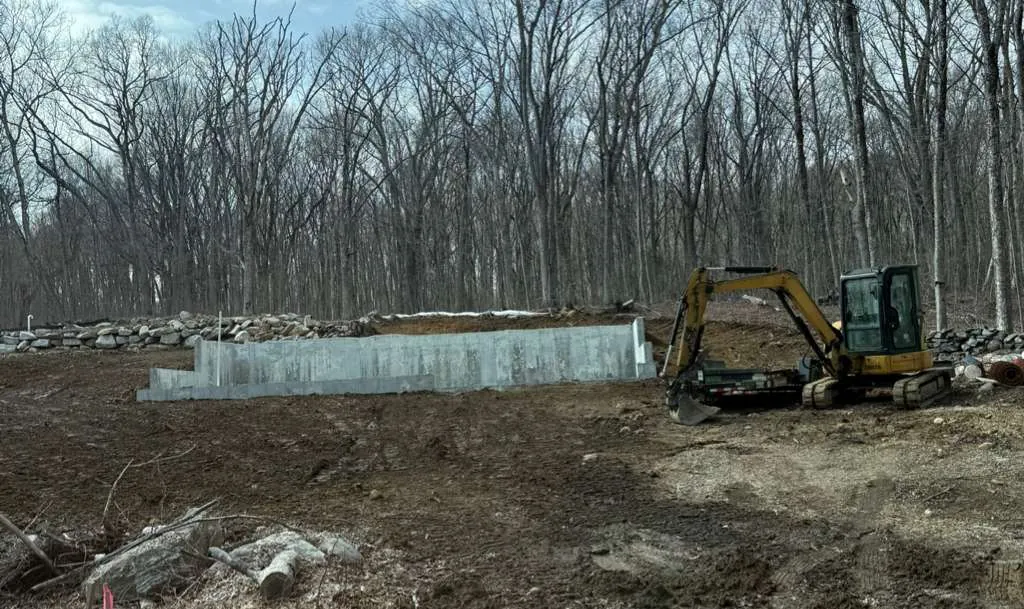
Every property needs a different kind of clearing. An overgrown backyard, a wooded building lot, and a commercial development site each call for a different approach. These are the five services that make up our land clearing work, on residential and commercial properties, and most jobs combine two or more of them.
- 01
Lot Clearing
Unwanted growth, debris, and obstacles removed from a lot before development.
- 02
Brush Removal
Dense brush and undergrowth cleared so equipment and people can reach the work.
- 03
Tree Clearing
Trees removed where they block construction, access, or site development.
- 04
Vegetation Removal
Ground vegetation cleared so excavation and grading can begin.
- 05
Construction Site Clearing
Obstacles cleared and the site opened right before building starts.
Common projects
When a Property Needs Land Clearing
Many lots in Central Massachusetts are wooded or have been left to grow over for years. Before anything can be built, equipment has to reach the building area and the ground has to be open for excavation. These are the projects that most often start with land clearing, from a single house lot to a larger site.
- A wooded building lot for a new home
- An overgrown backyard that will become an addition or patio
- A larger property being prepared for development
- A commercial site expansion into undeveloped land
- A path for a driveway, utilities, or construction access
Clearing is rarely the whole project. Once the lot is open, most properties move on to rough grading to shape the ground and to drainage if water collects where the trees used to be.
Our process
How a Land Clearing Project Runs
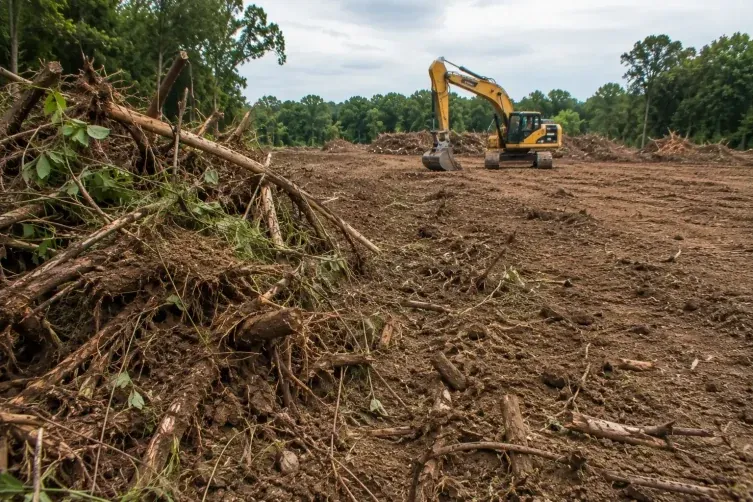
Good clearing starts with deciding what stays. We walk the property with you, mark the building area, the access route, and the trees to keep, and agree on what happens to the material we remove. Then the clearing moves in an order that keeps the site safe and accessible at every stage.
- 1
Property Assessment
We look at vegetation, trees, access, slopes, and the project plan.
- 2
Mark and Plan
Clearing limits and trees to keep are marked before any cutting.
- 3
Clear and Remove
Brush, trees, stumps, and debris are removed from the marked area.
- 4
Ready for Work
The cleared area is left open and stable for excavation or grading.
Clearing responsibly
Wetlands, Slopes, and Trees Worth Keeping
In Massachusetts, the land near wetlands, streams, and ponds is protected, and clearing close to them usually needs approval from the town's conservation commission before any work starts. Many wooded lots in our service area have a wet area somewhere on them, so it is worth checking with the town early in the planning.
Slopes need care too. Roots hold soil in place, and a hillside cleared all at once can wash out in the first heavy rain, sending mud onto the street or a neighbor's yard. Clearing only what the project needs, and moving on to grading and stabilization soon after, protects the property. Mature trees outside the work area add value to a lot, so we mark them early and keep equipment away from their roots wherever the plan allows.
The next step
What Happens to the Ground After Clearing
Clearing changes the ground underneath it. Once trees and brush come out, the soil is exposed to rain, the roots that held it are gone, and the surface is often uneven and full of holes from stumps. The work right after clearing decides whether the lot is ready to build on or turns into a muddy problem.
- Stump holes filled and compacted where the ground will be built on
- Topsoil stripped and saved for final grading and seeding
- Rough grading so rain runs off instead of pooling
- Temporary erosion control on slopes and near wetlands
- Access prepared for the next trade and their equipment
Because we also handle foundation excavation and grading, the cleared lot can move straight into the next stage with the same crew. That avoids a gap where bare ground sits open through a rainy season and has to be repaired before construction can begin.
Before we start
Planning Your Land Clearing Project
A few questions answered before the clearing starts make the work faster and avoid removing something you wanted to keep. During the site visit we go over these points with you, and the answers become part of the written estimate, so everyone knows the limits of the clearing before equipment arrives.
- Where the building, driveway, and utilities will go
- Which trees and plantings stay, and how they are protected
- Whether any part of the lot is near a wetland or stream
- What happens to the removed wood, stumps, and brush
- Whether grading or excavation follows right after the clearing
Imperial Excavations and Constructions Corp is a registered Massachusetts corporation and carries general liability insurance and workers' compensation coverage. A certificate of insurance is available on request, and so are references from past customers, so you can check both before any equipment reaches the property.
Where we work
Land Clearing in 88 Massachusetts Towns
We offer land clearing in eighty-eight towns and cities across Central Massachusetts, MetroWest, and Greater Boston, in Worcester, Middlesex, and Norfolk Counties, working out of our base in Milford. Many lots in the region are wooded or overgrown, and clearing is often the first step before anything can be built.
- Acton
- Ashburnham
- Ashland
- Athol
- Auburn
- Avon
- Barre
- Bedford
- Bellingham
- Berlin
- Boylston
- Braintree
- Brookfield
- Brookline
- Canton
- Charlton
- Clinton
- Cohasset
- Dedham
- Douglas
- Dover
- Dudley
- East Brookfield
- Fitchburg
- Foxborough
- Framingham
- Franklin
- Gardner
- Grafton
- Harvard
- Holbrook
- Holden
- Holliston
- Hopedale
- Hopkinton
- Hubbardston
- Hudson
- Lancaster
- Leicester
- Leominster
- Lowell
- Lunenburg
- Medfield
- Medway
- Mendon
- Milford
- Millbury
- Millis
- Milton
- Natick
- Needham
- New Braintree
- Norfolk
- North Brookfield
- Northborough
- Northbridge
- Norwood
- Oakham
- Oxford
- Paxton
- Plainville
- Princeton
- Quincy
- Randolph
- Rutland
- Sharon
- Shrewsbury
- Southborough
- Southbridge
- Spencer
- Sterling
- Stoughton
- Sturbridge
- Sutton
- Uxbridge
- Waltham
- Warren
- Webster
- Wellesley
- West Boylston
- West Brookfield
- Westborough
- Westminster
- Westwood
- Weymouth
- Winchendon
- Worcester
- Wrentham
Free estimate
Get a Free Land Clearing Estimate
Tell us about the property and what you plan to do with it, and send a plot plan if you have one. We will walk the lot, mark what needs to come out and what stays, and send a written estimate with the scope of the clearing, with no cost and no obligation.
- Free Estimates, No Obligation
- Insured
- Registered Massachusetts Corporation
- 4+ Years of Excavation Experience
- References Available
Prefer to talk? Call (508) 500-6598
FAQ
Land Clearing Questions and Answers
These are the questions property owners and builders ask most often about land clearing before they hire an excavation contractor in Central Massachusetts: what it includes, trees, stumps, wetlands, timing, and cost. If your question is not listed here, send it with your estimate request and we will answer it before any work is scheduled.
What is land clearing?
Land clearing is the removal of vegetation, brush, trees, stumps, debris, and other obstacles that are in the way of a construction, excavation, or development project. It opens the building area, the driveway, and the work zones, so equipment can reach the site and excavation and grading can begin. It is usually the first step on a wooded or overgrown lot.
What is included in your land clearing service?
Our land clearing service covers lot clearing, brush removal, tree clearing, vegetation removal, and construction site clearing, plus the removal of debris and loose rock from the work area. The estimate lists the area to be cleared, the trees to be removed, and what happens to the wood, stumps, and brush after they come out.
Do you remove stumps as part of land clearing?
Where the ground will be excavated or built on, stumps and large roots have to come out, because they rot and leave soft spots under foundations, slabs, and driveways. In areas that will stay as lawn or woods, stumps can sometimes be left. We go over this during the site visit and write it into the estimate.
Can you clear only part of my lot?
Yes, and that is often the best approach. We clear the areas the project needs, such as the building footprint, the driveway, and a work zone around them, and protect the rest. Before any cutting, the clearing limits and the trees you want to keep are marked on site, so there is no confusion once equipment arrives.
Do I need a permit to clear land in Massachusetts?
It depends on the town and the property. Clearing near wetlands, streams, or ponds usually needs approval from the town's conservation commission, and some towns have their own rules for tree removal or land disturbance. We recommend checking with the town during planning, and we ask about these conditions during the site visit.
Is land clearing necessary before excavation?
In most cases, yes. An excavator needs a clear path and an open work area, and the ground where the foundation or driveway goes has to be free of stumps and roots. Clearing first and then moving straight into site preparation and excavation keeps the project efficient and avoids working around obstacles.
What happens to the trees and brush you remove?
It depends on the project and the material. Brush, stumps, and debris are usually loaded and hauled away. Some property owners want to keep the wood for firewood or reuse, which can be arranged when it is planned in advance. The estimate states what leaves the site and what stays on the property.
Can land clearing cause erosion?
Yes, if a large area is cleared and left bare, especially on a slope. Rain can wash soil onto the street, into a wetland, or onto a neighbor's yard. Clearing only what the project needs and moving on to grading and stabilization soon after reduces that risk. On sensitive sites, the town may require specific erosion controls.
How long does land clearing take?
It depends on the size of the area, how dense the vegetation is, the number and size of trees, access, the terrain, and the weather. Clearing a backyard is a short job, while a wooded building lot takes longer. The estimate includes a schedule that fits the start of your excavation or construction.
How much does land clearing cost?
Land clearing costs depend on the size of the property, the density of the vegetation, the number of trees and stumps, access, the terrain, and how much material has to be hauled away. Because every lot is different, we walk the property first and send a free, no-obligation estimate based on what we see there.