
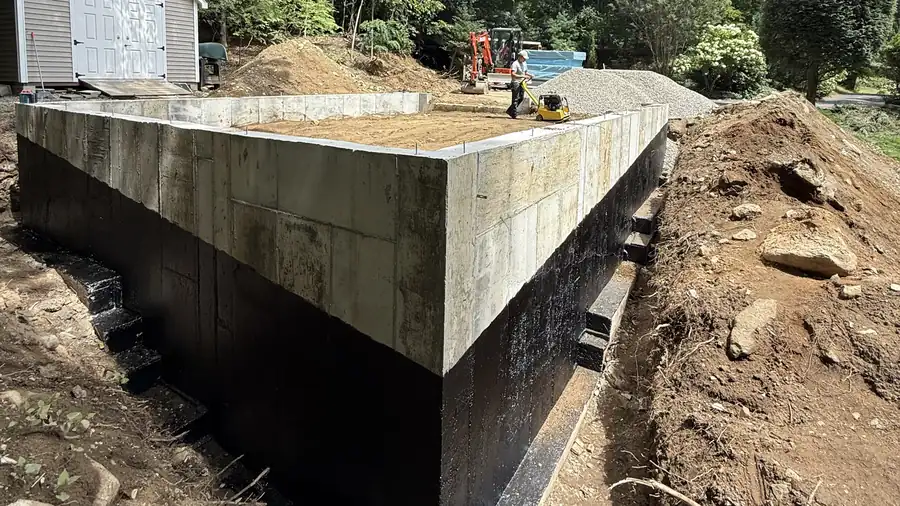
Foundation excavation
Foundation Excavation for Homes, Additions, and Basements
Foundation excavation for new homes, additions, full basements, and slabs, from the first layout stakes to the backfill, for homeowners and builders across Central Massachusetts, MetroWest, and Greater Boston.
- Free Estimates, No Obligation
- Insured
- Registered Massachusetts Corporation
- 4+ Years of Excavation Experience
- References Available
The scope
What Our Foundation Excavation Includes
Foundation excavation is the work that happens before and around the concrete. We open the hole to the depth and size on the plans, dig the footing trenches, prepare the bottom so the footings sit on firm ground, and come back after the walls are poured to drain, protect, and backfill them.
- Layout of the excavation from the foundation plan or the builder's stakes
- Excavation of the foundation hole, footing trenches, or full basement
- A firm, level bottom for the footings, with soft spots dug out
- Removal or reuse of the excavated soil, rock, and stumps
- Drainage stone at the footing, dampproofing support, and backfill
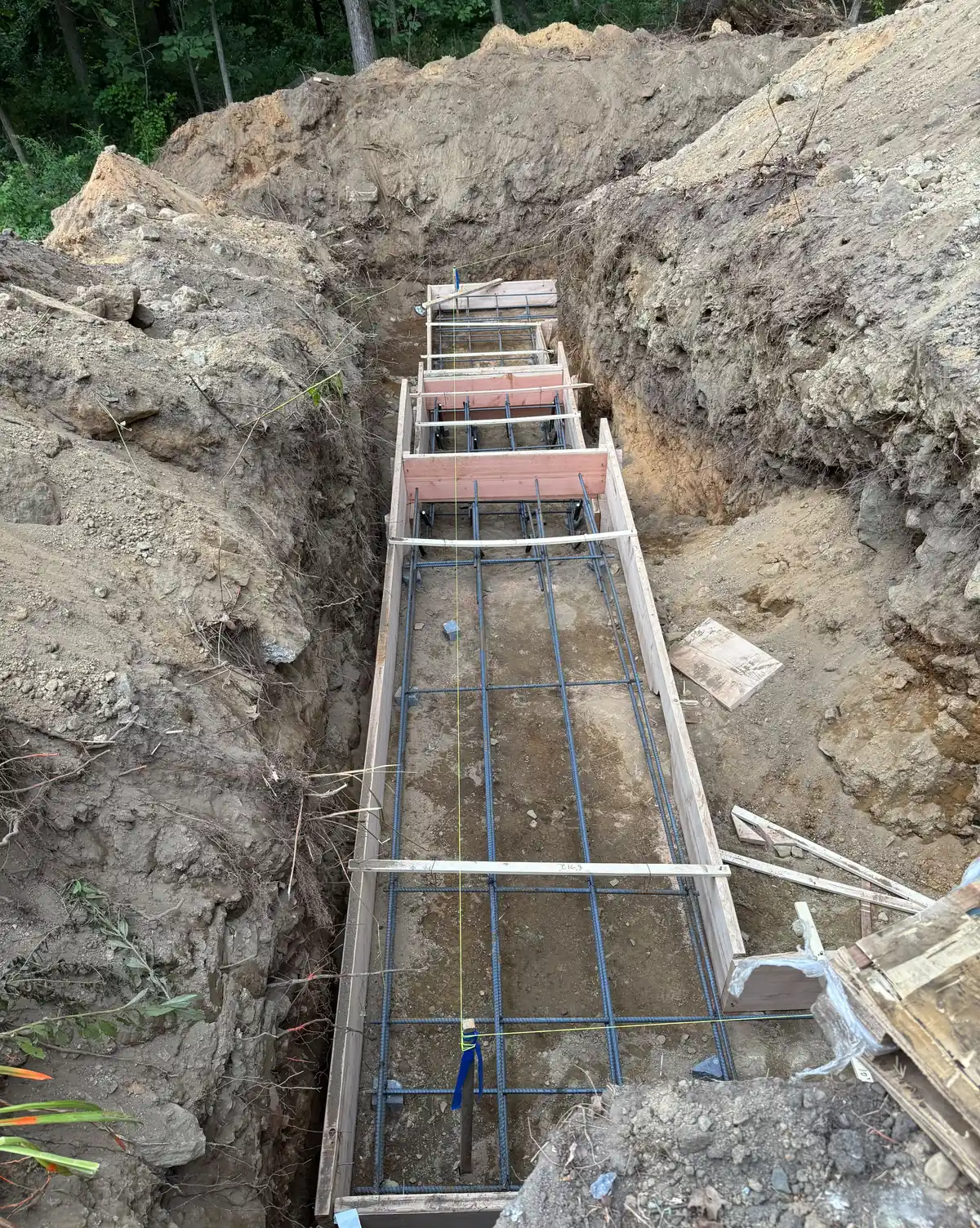
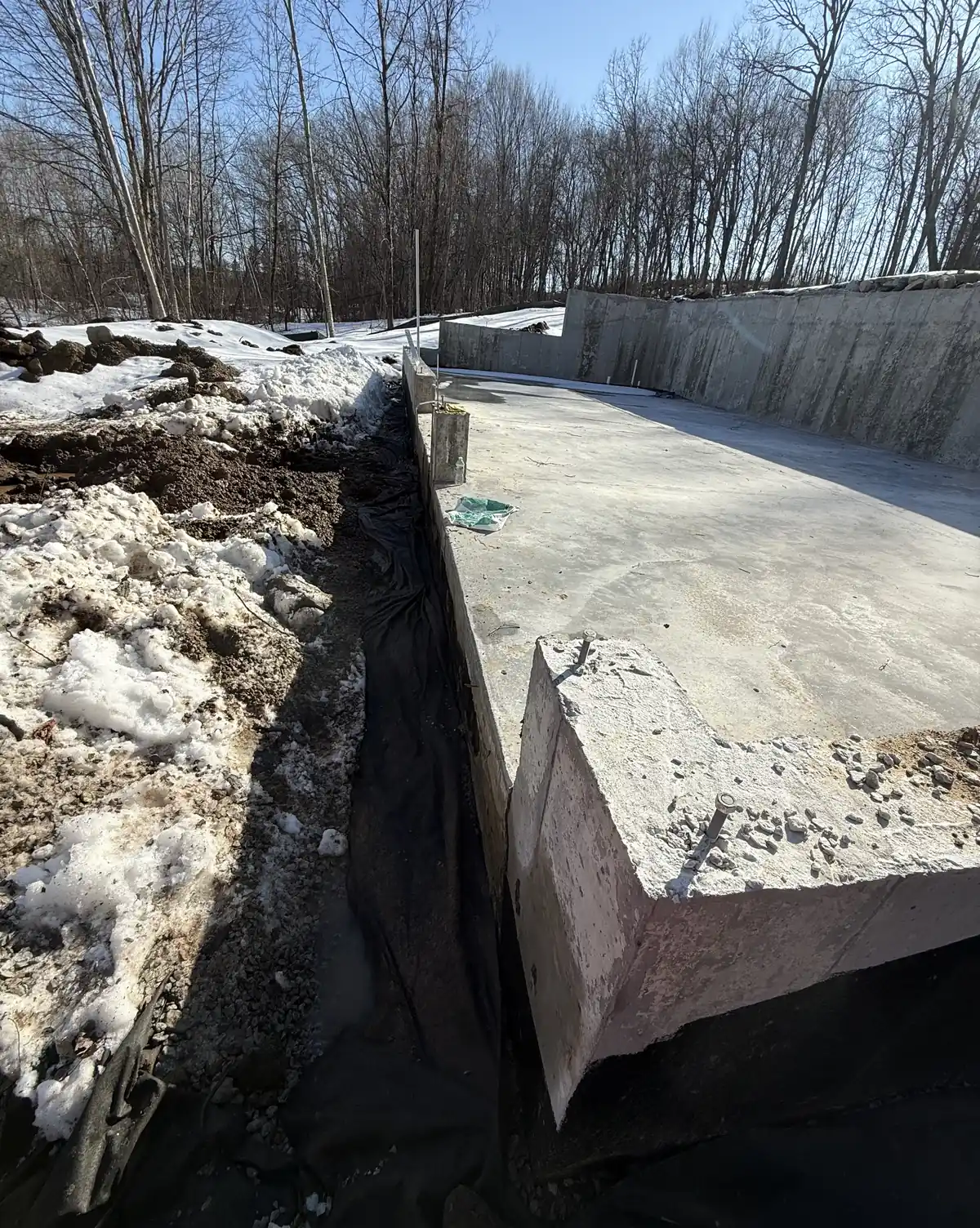
Foundation work is the center of what we do, and it is what most of our project photos show: footing forms with rebar in the trench, poured walls with black dampproofing, crushed stone along the footing, and finished basement floors. The same crew can also clear the lot before the dig and handle basement waterproofing on the new walls after it.
Five parts of the job
Foundation Excavation Services We Provide
A foundation project is not one task. It is a sequence of excavation jobs that each prepare the ground for the next trade, and every one of them affects how well the finished foundation performs. These are the five parts of the work that our foundation excavation service covers, on residential and commercial projects.
- 01
Foundation Site Preparation
Clearing the work area, setting access for equipment and concrete trucks, and stripping topsoil.
- 02
Footing Excavation
Trenches dug to the depth on the plans, so the footings carry the load below the frost line.
- 03
Basement Excavation
The full-depth dig for a basement or walkout, with room around the walls to work.
- 04
Concrete Foundation Preparation
A firm, level, compacted bottom and stone base where the forms and slab will sit.
- 05
Building Pad Excavation
A stable, graded pad for slabs, garages, and accessory buildings.
Common projects
When a Project Needs Foundation Excavation
Any structure that carries a real load needs footings or a foundation under it, and those have to sit on undisturbed or properly compacted ground at the right depth. These are the projects that bring property owners and builders to us most often, from a full new home to a small garage slab.
- A new single-family home with a full basement or a crawl space
- A home addition with new footings tied to the existing house
- A walkout basement on a sloped lot
- A slab foundation for a garage, shed, or accessory building
- A commercial building or expansion with its own foundation plan
Additions are some of the most delicate jobs, because the new hole is dug right against a house that people are living in. Our residential excavation page explains how we work close to an existing foundation, and our commercial excavation page covers larger building pads.
Our process
How a Foundation Excavation Project Runs
A foundation dig sets the schedule for every trade that follows: the concrete crew, the framers, and everyone after them. We keep the order of work clear from the first visit, so the hole is ready when the forms arrive, the walls are protected before backfill, and the site is graded when we leave.
- 1
Site Assessment
We review the plans, access, grades, soil, and where water collects on the lot.
- 2
Layout and Utilities
Dig Safe markings are confirmed and the excavation is laid out from the plan.
- 3
Excavation
We dig the hole and footings, prepare the bottom, and keep the edges safe.
- 4
Drain and Backfill
After the walls cure, drainage stone goes in and we backfill and grade.
Soil, rock, and water
Massachusetts Ground Conditions That Shape the Dig
Most of Central Massachusetts sits on glacial soil: a mix of sand, silt, stones, and boulders, with ledge close to the surface in some neighborhoods and wet ground on many hillside lots. None of that is visible from the street, and all of it changes how the foundation hole is dug and drained.
Boulders are pulled out and either reused or hauled away, and soft or wet spots at the bottom are dug out and replaced with compacted stone so the footings do not settle. When the dig hits ledge, we stop and talk with you and your builder about the options before going further. Groundwater and surface water are handled with drainage stone at the footing, and where the site calls for it, with foundation drainage that carries water away from the walls, or a sump pump where the drains have no outlet downhill.
Winter is the other factor. Footings have to sit below the frost depth set by the building code, and concrete should not be poured on frozen ground, so much foundation work is planned for spring through fall. A winter site visit is still worth it: it puts your project at the front of the line when the ground opens up.
Comparing bids
Questions to Ask Before Hiring a Foundation Excavator
Foundation excavation bids can look similar on paper and still describe very different jobs. Before you compare prices, compare what each estimate actually includes. These are the questions that reveal the difference, and the answers should be in writing, not only in a conversation at the end of a site visit.
- Does the price include footing trenches, or only the main hole?
- Who supplies the crushed stone for drainage and the base under the slab?
- Is backfill and rough grading around the foundation included?
- What happens to the excavated soil, rock, and stumps?
- How are ledge and unexpected conditions handled and approved?
Our written estimates answer each of these points, so you know what is included before the work starts and what would need a separate decision. If an item depends on the builder or the concrete crew, the estimate says so, and we coordinate it with them instead of leaving a gap between trades.
Before we dig
Planning Your Foundation: Permits, Access, and Timing
A good foundation excavation starts before any equipment arrives. The building permit and the approved plans set the size and depth of the dig, the lot sets how equipment and concrete trucks get in, and the season sets when the work can start. Settling these points early prevents most of the delays we see.
- Approved foundation plan or builder's layout, with the finished elevations
- Building permit in place, and any other approvals the town requires
- Dig Safe request completed and utility markings visible on site
- A clear path for the excavator and the concrete trucks
- A place on the lot for the excavated soil, or a plan to haul it away
If the lot is wooded or has an old structure on it, land clearing or demolition comes first, and we can schedule it as part of the same job. Imperial Excavations and Constructions Corp is a registered Massachusetts corporation and carries general liability insurance and workers' compensation coverage. A certificate of insurance is available on request, and so are references from past customers, so you can check both before any equipment reaches the property.
Where we work
Foundation Excavation in 88 Massachusetts Towns
We offer foundation excavation in eighty-eight towns and cities across Central Massachusetts, MetroWest, and Greater Boston, in Worcester, Middlesex, and Norfolk Counties, working out of our base in Milford. Older neighborhoods mean tight additions next to existing houses, and newer subdivisions mean wooded lots and full basements.
- Acton
- Ashburnham
- Ashland
- Athol
- Auburn
- Avon
- Barre
- Bedford
- Bellingham
- Berlin
- Boylston
- Braintree
- Brookfield
- Brookline
- Canton
- Charlton
- Clinton
- Cohasset
- Dedham
- Douglas
- Dover
- Dudley
- East Brookfield
- Fitchburg
- Foxborough
- Framingham
- Franklin
- Gardner
- Grafton
- Harvard
- Holbrook
- Holden
- Holliston
- Hopedale
- Hopkinton
- Hubbardston
- Hudson
- Lancaster
- Leicester
- Leominster
- Lowell
- Lunenburg
- Medfield
- Medway
- Mendon
- Milford
- Millbury
- Millis
- Milton
- Natick
- Needham
- New Braintree
- Norfolk
- North Brookfield
- Northborough
- Northbridge
- Norwood
- Oakham
- Oxford
- Paxton
- Plainville
- Princeton
- Quincy
- Randolph
- Rutland
- Sharon
- Shrewsbury
- Southborough
- Southbridge
- Spencer
- Sterling
- Stoughton
- Sturbridge
- Sutton
- Uxbridge
- Waltham
- Warren
- Webster
- Wellesley
- West Boylston
- West Brookfield
- Westborough
- Westminster
- Westwood
- Weymouth
- Winchendon
- Worcester
- Wrentham
Free estimate
Get a Free Foundation Excavation Estimate
Tell us about the home, addition, or slab you are planning, and send the plans if you have them. We will visit the lot, look at access, grades, and drainage, and send a written estimate with the scope of the excavation, with no cost and no obligation to hire us.
- Free Estimates, No Obligation
- Insured
- Registered Massachusetts Corporation
- 4+ Years of Excavation Experience
- References Available
Prefer to talk? Call (508) 500-6598
FAQ
Foundation Excavation Questions and Answers
These are the questions property owners and builders ask most often about foundation excavation before they hire an excavation contractor in Central Massachusetts: what it includes, depth, rock, water, timing, and cost. If your question is not listed here, send it with your estimate request and we will answer it before any work is scheduled.
What is foundation excavation?
Foundation excavation is the digging and ground preparation that comes before a foundation is poured. It includes laying out the hole, excavating to the depth on the plans, digging the footing trenches, preparing a firm bottom for the footings, and, after the walls are poured, adding drainage stone and backfilling. It is the first major stage of building a home or addition.
What is included in your foundation excavation service?
Our foundation excavation service covers foundation site preparation, footing excavation, basement excavation, concrete foundation preparation, and building pad excavation, plus removal or reuse of the soil we dig out. After the walls are poured, we place drainage stone at the footing and backfill and grade around the foundation. The estimate lists exactly which parts your project needs.
How deep do footings need to be in Massachusetts?
Footings have to sit below the frost depth that the Massachusetts building code sets, so the ground under them does not freeze and heave. The exact depth comes from your approved foundation plan and the local building department. We dig to the depth on the plans and make sure the footings bear on firm, undisturbed or compacted ground, not on loose fill.
What happens if you hit ledge or large boulders?
Boulders are common in Massachusetts soil, and we remove them as part of the dig, then reuse them on site or haul them away. Ledge is different, because it cannot simply be scooped out. If the excavation reaches ledge, we stop and go over the options with you and your builder, such as adjusting the elevation, before any extra work is done.
Can you dig a foundation for an addition next to my house?
Yes. Many of our projects are additions dug right next to an existing home, as our photos show. We locate the existing foundation and utilities first, dig carefully along the house, and protect what is already there. The new footings are dug to the depth on the plans so the addition and the house stay stable together.
How long does foundation excavation take?
It depends on the size of the foundation, the depth, the soil and rock we find, access for equipment, and the weather. A small addition is a much shorter job than a full basement for a new home. We give you a realistic schedule in the estimate and coordinate the timing with your builder and the concrete crew.
Do you handle drainage around the new foundation?
Yes. Water is the biggest long-term risk for a foundation, so drainage is part of the job. We place crushed drainage stone along the footing, support the dampproofing on the outside of the walls, and backfill and grade so surface water runs away from the house. When a site needs more, our drainage solutions service covers foundation drains.
What happens to the soil from the foundation hole?
Good soil can often stay on the property and go back in as backfill or be used for grading, which keeps hauling to a minimum. Rock, stumps, and excess soil that the site cannot use are loaded and taken away. The estimate states what stays on the lot, what leaves, and any material, such as crushed stone, that has to be brought in.
Can foundation excavation be done in winter?
Some winter excavation is possible, but frozen ground slows digging, and concrete should not be placed on frozen soil. For that reason most foundation work in Massachusetts runs from spring through fall. Winter is a good time for the site visit, the estimate, and permit paperwork, so your project is ready to start as soon as conditions allow.
How much does foundation excavation cost?
The cost depends on the size and depth of the foundation, the soil and rock on the site, access for equipment, how much material has to be hauled away or brought in, and the drainage the job needs. Because every lot is different, we do not quote over the phone. We visit the property and send a free, no-obligation estimate.