
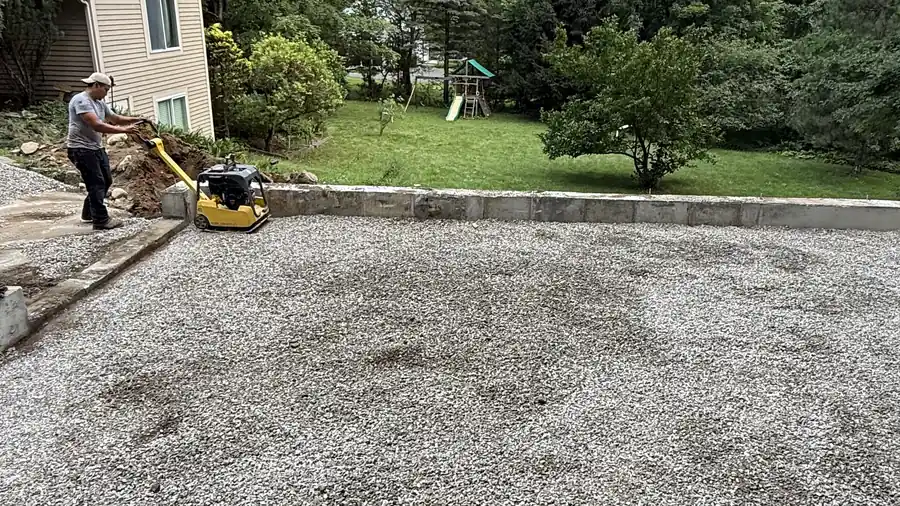
Drainage solutions
Drainage Solutions for Wet Yards and Foundations
Drainage solutions that move water away from foundations and out of yards: French drains, foundation drainage, yard drainage, stormwater management, and the excavation behind them, for homes and commercial properties across Central Massachusetts, MetroWest, and Greater Boston.
- Free Estimates, No Obligation
- Insured
- Registered Massachusetts Corporation
- 4+ Years of Excavation Experience
- References Available
The scope
What Our Drainage Solutions Include
Drainage solutions give water somewhere to go before it reaches the house. Every property sheds rain, snowmelt, and groundwater, and when the ground cannot carry that water away on its own, it collects in the yard, against the foundation, or in the basement. A drainage system collects it and moves it to a safe place.
- French drains that collect water in a stone-filled trench
- Foundation drainage along the footing of the house
- Yard drainage for low spots and soggy lawns
- Stormwater management for roofs, driveways, and paved areas
- Drainage grading that slopes the ground away from the house
- Excavation, crushed stone, and backfill for every drainage system
Drainage often includes regrading, because a yard that slopes the wrong way will keep sending water toward the house. On new construction, foundation drainage is part of foundation excavation, when the ground around the walls is already open, and in the basement it works with sump pump installation and basement waterproofing.
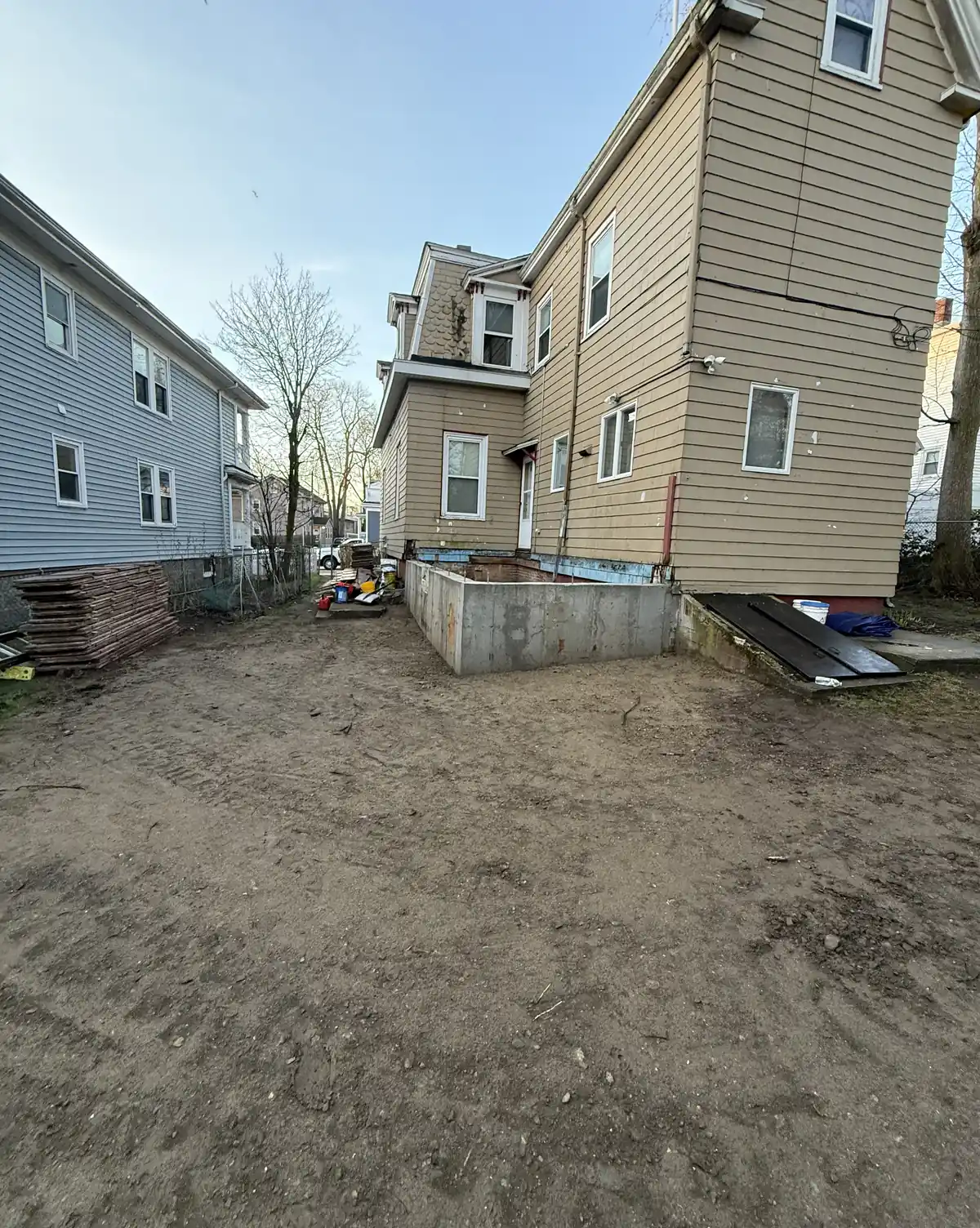
Five kinds of drainage
Drainage Solutions We Provide
Water problems have different causes, so they need different solutions. A puddle in the lawn, a wet basement, and a driveway that floods in every storm are three different jobs. These are the five drainage services we excavate for, on residential and commercial properties, alone or combined in one project.
- 01
French Drains
A trench with stone and a perforated pipe that collects water and carries it away.
- 02
Foundation Drainage
Drainage along the footing that keeps water away from the basement walls.
- 03
Yard Drainage
Drains and grading for low spots, soggy lawns, and water at the bottom of slopes.
- 04
Stormwater Management
Systems that handle water from roofs, driveways, and paved areas.
- 05
Drainage System Excavation
The digging, stone, and backfill that every drainage system needs.
What to look for
Signs Your Property Has a Drainage Problem
Drainage problems rarely fix themselves. Water that collects once tends to collect every time it rains, and over the years it wears away soil, damages foundations, and keeps basements damp. These are the signs we hear about most often from homeowners and property managers before a site visit.
- Water in the basement or a damp smell after storms
- Puddles that stay in the lawn for days
- Soil washing away along the foundation or the driveway
- Downspouts that empty right next to the house
- A sump pump that runs constantly in wet weather
Sometimes the cause is simply grading that slopes toward the house, and regrading is enough. When the ground itself holds water, or water comes from uphill, a drain is needed. We look at both during the site visit before recommending a solution.
Our process
How a Drainage Project Runs
A drainage system only works if it is built for the water it has to handle. We start by finding where the water comes from and where it can go, then design the trench, the stone, and the outlet around that. After the system is built, we backfill and grade so the surface helps it work.
- 1
Find the Source
We look at where water comes from, where it collects, and the soil.
- 2
Plan the Route
The drain path, depth, and outlet are set so water has somewhere to go.
- 3
Excavate and Build
We dig the trench, place stone and pipe, and connect the outlet.
- 4
Backfill and Grade
The trench is backfilled and the surface graded to help the drain.
Protecting the basement
Foundation Drainage on New and Existing Homes
Foundation drainage is easiest and most effective when the foundation is new and the ground around it is still open. Our basement waterproofing page shows this stage: poured walls coated in black on the outside, and crushed drainage stone placed along the footing before backfill, so water around the foundation is carried away instead of pressing against the walls.
Inside the basement, a sump basin set into the floor collects water that reaches the drainage under and around the slab, so a pump can discharge it outside, as our sump pump installation page explains. On existing homes, foundation drainage means excavating along the walls, which is a bigger job, so we usually start by correcting the grading and the downspouts and add drains where the problem continues. In Massachusetts, where snowmelt and spring rain arrive while the ground is still frozen, these systems carry a lot of water in a short time.
Roof water
Dry Wells, Downspouts, and Water From the Roof
A large share of the water around a house comes from the roof. Every downspout delivers the rain from a whole section of roof to one spot, and when that spot is next to the foundation, the basement often pays for it. Moving roof water away is one of the simplest and most effective drainage fixes.
- Downspout extensions that carry water out into the yard
- Buried pipes that connect downspouts to a safe outlet
- Dry wells that let roof water soak into the ground away from the house
- Regrading so the outlet area drains instead of pooling
- Sump pump discharge lines routed away from the foundation
A dry well only works in soil that can absorb water, so the site visit includes a look at the soil and the slope before we recommend one. Where the ground cannot take the water, the pipe is routed to another outlet, such as a lower part of the property or a swale shaped by regrading the yard.
Before we start
Planning a Drainage Project
The most useful thing you can do before a drainage estimate is watch the property in the rain. Where does the water come from, where does it go, and how long does it stay? Photos or videos from a storm help us understand the problem much faster than a dry day on site can.
- Photos or videos of the water during or after a storm
- Where downspouts and sump pumps discharge today
- Where water could be sent: the street, a swale, or a dry well
- Wetlands or streams near the property that may need approval
- Patios, walkways, and plantings in the path of the drain
Imperial Excavations and Constructions Corp is a registered Massachusetts corporation and carries general liability insurance and workers' compensation coverage. A certificate of insurance is available on request, and so are references from past customers, so you can check both before any equipment reaches the property.
Where we work
Drainage Solutions in 88 Massachusetts Towns
We offer drainage solutions in eighty-eight towns and cities across Central Massachusetts, MetroWest, and Greater Boston, in Worcester, Middlesex, and Norfolk Counties, working out of our base in Milford. Hillside lots, low yards, and older homes with settled backfill are the places where drainage problems show up most.
- Acton
- Ashburnham
- Ashland
- Athol
- Auburn
- Avon
- Barre
- Bedford
- Bellingham
- Berlin
- Boylston
- Braintree
- Brookfield
- Brookline
- Canton
- Charlton
- Clinton
- Cohasset
- Dedham
- Douglas
- Dover
- Dudley
- East Brookfield
- Fitchburg
- Foxborough
- Framingham
- Franklin
- Gardner
- Grafton
- Harvard
- Holbrook
- Holden
- Holliston
- Hopedale
- Hopkinton
- Hubbardston
- Hudson
- Lancaster
- Leicester
- Leominster
- Lowell
- Lunenburg
- Medfield
- Medway
- Mendon
- Milford
- Millbury
- Millis
- Milton
- Natick
- Needham
- New Braintree
- Norfolk
- North Brookfield
- Northborough
- Northbridge
- Norwood
- Oakham
- Oxford
- Paxton
- Plainville
- Princeton
- Quincy
- Randolph
- Rutland
- Sharon
- Shrewsbury
- Southborough
- Southbridge
- Spencer
- Sterling
- Stoughton
- Sturbridge
- Sutton
- Uxbridge
- Waltham
- Warren
- Webster
- Wellesley
- West Boylston
- West Brookfield
- Westborough
- Westminster
- Westwood
- Weymouth
- Winchendon
- Worcester
- Wrentham
Free estimate
Get a Free Drainage Solutions Estimate
Tell us where the water collects and when you see it, and send photos from a storm if you have them. We will look at the property, the grading, and the foundation, and send a written estimate with the drainage work we recommend, with no cost and no obligation to hire us.
- Free Estimates, No Obligation
- Insured
- Registered Massachusetts Corporation
- 4+ Years of Excavation Experience
- References Available
Prefer to talk? Call (508) 500-6598
FAQ
Drainage Solutions Questions and Answers
These are the questions property owners and builders ask most often about drainage solutions before they hire an excavation contractor in Central Massachusetts: French drains, foundation drainage, yard drainage, sump basins, and cost. If your question is not listed here, send it with your estimate request and we will answer it before any work is scheduled.
What drainage solutions do you offer?
We excavate for and build French drains, foundation drainage, yard drainage, and stormwater management systems, and we handle the excavation, crushed stone, and backfill that each system needs. Many projects combine drainage with grading so the surface and the drain work together. The estimate explains which solution fits the water problem on your property and why.
What is a French drain?
A French drain is a trench filled with crushed stone, usually with a perforated pipe in it, that collects water from the surrounding soil and carries it to a safe outlet. It is used to dry out soggy areas, intercept water coming downhill, and keep water away from foundations. The trench depth and route depend on where the water comes from.
What is foundation drainage?
Foundation drainage is a system along the footing of a house that collects water in the soil around the foundation and carries it away before it can press against the basement walls. On new homes it is installed with crushed drainage stone along the footing before backfill. On existing homes, it requires excavating along the foundation walls.
Can you fix water in my basement?
Water in a basement usually comes from outside: grading that slopes toward the house, downspouts emptying next to the walls, or groundwater around the foundation. We look for the source first and address it from the outside when we can, with grading, yard drains, or foundation drainage. When the basement needs more, our basement waterproofing and sump pump installation services cover exterior waterproofing, interior drains, and sump systems.
Where does the water from a drain go?
Every drain needs an outlet: a lower part of the property, a swale, a dry well, or a storm drain where the town allows a connection. Choosing the outlet is one of the most important decisions in a drainage project, because water cannot be sent onto a neighbor's property. We plan the outlet during the site visit.
Is grading enough to solve my drainage problem?
Sometimes. When water collects because the ground slopes toward the house or settled backfill created a low area, regrading so water runs away from the foundation may be all that is needed. When the soil holds water or water comes from uphill, a drain is needed as well. We check both before recommending the simpler solution first.
Do you handle stormwater on commercial properties?
Yes. Commercial properties with large roofs, driveways, and parking areas shed a lot of water in a short time, and many need stormwater systems to handle it. We excavate for and build those systems to the engineered drainage plan, and we can combine the work with grading. Our commercial excavation page explains how we work from site plans.
Do drainage projects need a permit?
Many small residential drainage projects do not, but work near wetlands or streams usually needs approval from the town's conservation commission, and connecting to a town storm drain needs the town's permission. Commercial stormwater systems are often part of a project's permit. We ask about these conditions during the site visit and recommend checking with the town.
How long does a drainage project take?
It depends on the type and length of the drain, the depth, the soil and rock, access, the outlet, and the weather. A short yard drain is a quick job, while foundation drainage on an existing home takes longer because the walls have to be excavated. The estimate includes a schedule, and we restore the surface when the work is done.
How much do drainage solutions cost?
The cost depends on the type of drainage, the length and depth of the trench, the soil and rock, access for equipment, the outlet, and how much surface has to be restored afterward. We look at the property and the water problem in person, then send a free, no-obligation estimate that explains the solution we recommend.