
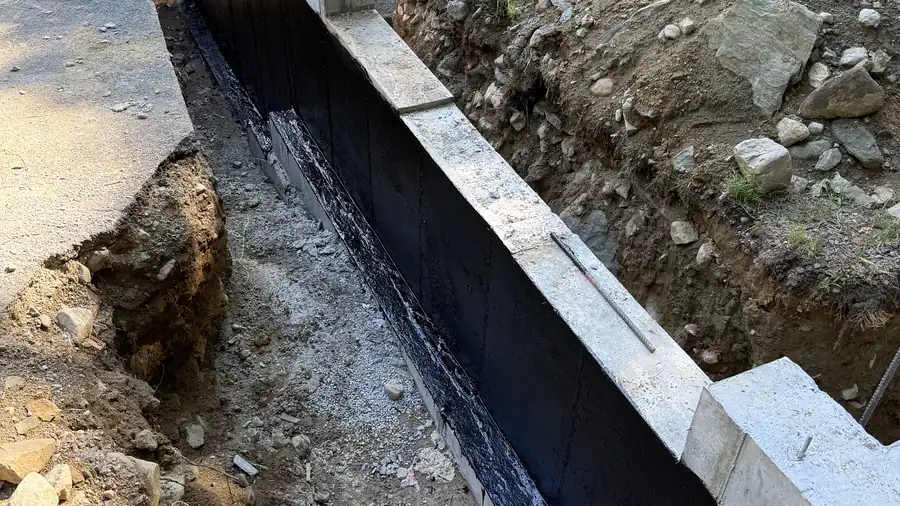
Basement waterproofing
Basement Waterproofing From the Outside In
Basement waterproofing by an excavation and foundation crew: exterior waterproofing dug down to the footing, interior drains with a sump when digging outside is not the right answer, and foundation crack sealing, for homes across Central Massachusetts, MetroWest, and Greater Boston.
- Free Estimates, No Obligation
- Insured
- Registered Massachusetts Corporation
- 4+ Years of Excavation Experience
- References Available
The scope
What Our Basement Waterproofing Includes
Basement waterproofing keeps water from reaching the inside of the foundation, or catches it and sends it away when it does. Because we are an excavation and foundation contractor, we can work from both sides of the wall: digging outside down to the footing, or draining the water inside the basement to a sump.
- Exterior waterproofing, with the wall dug out down to the footing
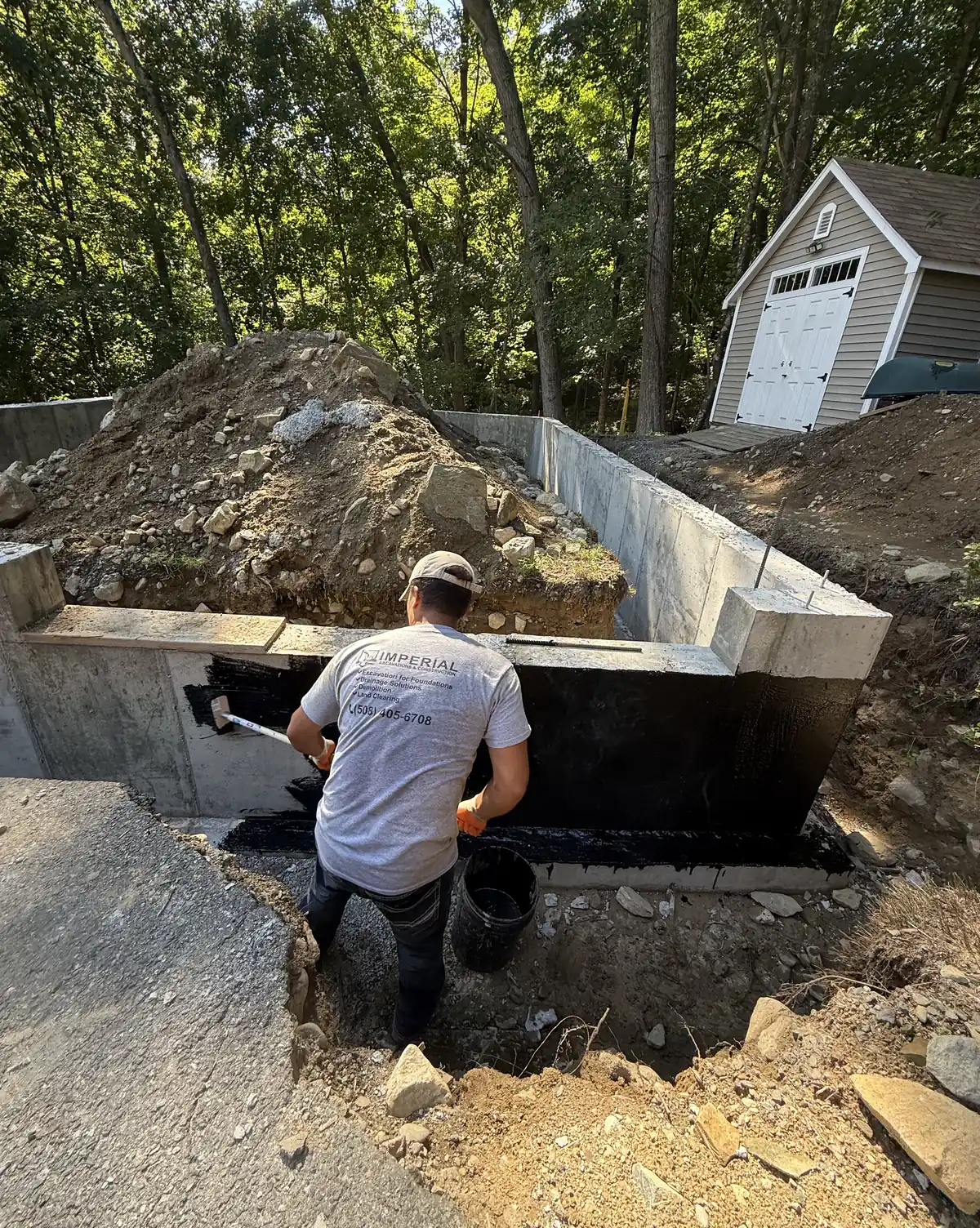
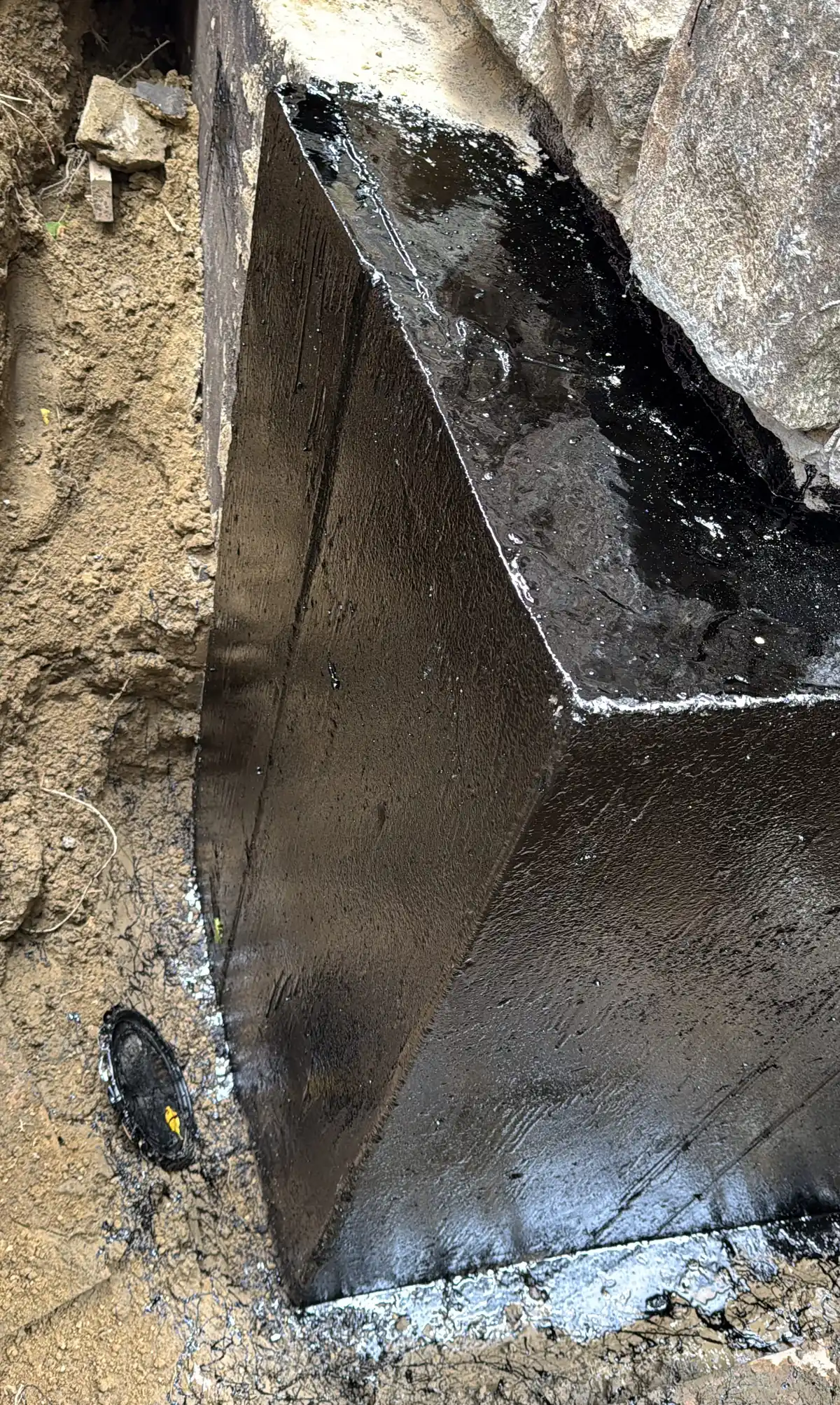
- A waterproofing membrane and a drainage mat on the outside of the wall
- A footing drain wrapped in filter fabric, with stone backfill
- Interior drains along the walls that lead to a sump pump
- Foundation crack sealing, from inside or with the wall dug out
Waterproofing does its job as part of a system. The water collected along the footing is carried away by drainage solutions, interior drains end in a sump pump installation, and on a new home the same steps are part of foundation excavation, while the ground is still open.
Local conditions
Why Central Massachusetts Basements Take On Water
Most of the region sits on dense glacial till, and the official state soil, the Paxton series, was first described in Worcester County. The official USDA description notes that water may perch on that dense layer from late fall through early spring, so rain and snowmelt run sideways until they reach a basement wall.
The U.S. Geological Survey reports that the water table in Massachusetts most often peaks in March and April, and names a high water table as a major cause of wet basements. Older homes add their own reasons: fieldstone and block walls with worn joints, backfill that settled toward the house, and downspouts that empty right at the foundation. Each one lets water press against the wall, and each one points to a different fix.
From the outside
Exterior Basement Waterproofing, Step by Step
Exterior waterproofing stops water at the outside face of the wall, before it can reach the concrete or the joints. It is the most complete approach, and it is excavation work: the wall has to be dug out down to the footing, so the job fits a crew that digs and backfills foundations every week.
- 01
Excavate to the Footing
The wall is dug out along the side being treated, after Dig Safe marks the utilities.
- 02
Clean and Seal
The wall is cleaned and inspected, and cracks are sealed from the outside.
- 03
Membrane and Drainage Mat
A waterproofing membrane goes on the wall, with a dimpled drainage mat over it.
- 04
Footing Drain
A perforated drain wrapped in filter fabric is set in stone along the footing.
- 05
Backfill and Grade
The trench is backfilled with stone that drains, and the ground slopes away.
From the inside
Interior Drains and Sump Pumps
When digging outside is not practical, because of a deck, a driveway, a property line, or a finished yard, the water can be handled from the inside. An interior drain runs along the walls under the edge of the floor and carries the water that reaches the footing to a sump basin, where a pump sends it outside.
- The floor is opened along the walls where the drain will run
- A perforated drain is set in stone at the level of the footing
- The drain leads to a sump basin with a pump and a backup
- The floor is closed with new concrete over the drain
An interior system handles water after it reaches the wall; it does not keep it from getting there. It also relieves water that rises under the slab, and it can be built in any season. Our sump pump installation page explains the pump, the backup, and where the discharge can go.
Choosing the approach
Interior vs. Exterior Waterproofing
Neither approach is right for every basement. Exterior waterproofing stops water at the source but means excavating along the house. Interior drains disturb less of the yard and work in any season, but they handle the water once it is already at the wall. We look at the house and the lot and explain which one fits, and why.
- Exterior: stops water at the outside of the wall, with excavation
- Interior: catches water at the footing, with the floor opened
- Both: common where water comes through the walls and from under the slab
- Crack sealing: for a leak at one crack rather than along a whole wall
Older homes
Older Foundations: Fieldstone, Block, and Poured Concrete
The type of wall changes the work. Poured concrete leaks mostly at cracks, at the joint where the wall meets the floor, and around pipes. Block walls can hold water inside their hollow cores. Fieldstone walls, common under older homes in the region, take in water through the mortar joints as the old mortar wears away.
For a fieldstone wall, the outside work matters most: draining the soil around it and correcting the grade so less water reaches the joints, with an interior drain to a sump for the water that still comes through. For concrete and block, cracks are sealed and the wall is treated from the side the plan calls for. We tell you what we see in the wall at the site visit, and we do not promise a result the wall cannot give.
The first defense
Grading, Gutters, and Downspouts Come First
Some wet basements do not need waterproofing at all. Building science guidance treats gutters and grading as the first defense: when the ground slopes away from the house and the downspouts empty far from the walls, much less water reaches the foundation. We check these first, because they are the simplest fix when they are the cause.
If the grade or the downspouts are part of the problem, we correct them in the same project with drainage solutions, such as regrading along the house, buried downspout lines, or a French drain that catches the water coming downhill.
Before we dig
Dig Safe, Trench Permits, and Town Permits
Exterior waterproofing means a trench along the house, and digging in Massachusetts comes with rules. Dig Safe has to be notified before excavation, and a trench deeper than three feet generally needs a trench permit from the town under state regulations. We go over which permits the project needs, and the written estimate states who is responsible for each one.
- A Dig Safe request with at least 72 hours of notice, not counting weekends and holidays
- A trench permit from the town for a trench deeper than three feet
- Any building permit the town requires for the work
- Access along the house for the equipment and the backfill stone
- Plantings, walkways, and steps along the wall that may need to be moved
Imperial Excavations and Constructions Corp is a registered Massachusetts corporation and carries general liability insurance and workers' compensation coverage. A certificate of insurance is available on request, and so are references from past customers, so you can check both before any equipment reaches the property.
Where we work
Basement Waterproofing in 88 Massachusetts Towns
We offer basement waterproofing in eighty-eight towns and cities across Central Massachusetts, MetroWest, and Greater Boston, in Worcester, Middlesex, and Norfolk Counties, working out of our base in Milford. The region has everything from fieldstone foundations under older homes to poured basements on wet hillside lots.
- Acton
- Ashburnham
- Ashland
- Athol
- Auburn
- Avon
- Barre
- Bedford
- Bellingham
- Berlin
- Boylston
- Braintree
- Brookfield
- Brookline
- Canton
- Charlton
- Clinton
- Cohasset
- Dedham
- Douglas
- Dover
- Dudley
- East Brookfield
- Fitchburg
- Foxborough
- Framingham
- Franklin
- Gardner
- Grafton
- Harvard
- Holbrook
- Holden
- Holliston
- Hopedale
- Hopkinton
- Hubbardston
- Hudson
- Lancaster
- Leicester
- Leominster
- Lowell
- Lunenburg
- Medfield
- Medway
- Mendon
- Milford
- Millbury
- Millis
- Milton
- Natick
- Needham
- New Braintree
- Norfolk
- North Brookfield
- Northborough
- Northbridge
- Norwood
- Oakham
- Oxford
- Paxton
- Plainville
- Princeton
- Quincy
- Randolph
- Rutland
- Sharon
- Shrewsbury
- Southborough
- Southbridge
- Spencer
- Sterling
- Stoughton
- Sturbridge
- Sutton
- Uxbridge
- Waltham
- Warren
- Webster
- Wellesley
- West Boylston
- West Brookfield
- Westborough
- Westminster
- Westwood
- Weymouth
- Winchendon
- Worcester
- Wrentham
Free estimate
Get a Free Basement Waterproofing Estimate
Tell us where the water shows up in your basement and when, and send photos from the last storm if you have them. We will look at the walls, the floor, the grade, and the downspouts, and send a written estimate that explains the approach we recommend, with no cost and no obligation.
- Free Estimates, No Obligation
- Insured
- Registered Massachusetts Corporation
- 4+ Years of Excavation Experience
- References Available
Prefer to talk? Call (508) 500-6598
FAQ
Basement Waterproofing Questions and Answers
These are the questions property owners and builders ask most often about basement waterproofing before they hire an excavation contractor in Central Massachusetts: interior or exterior, leaks, cracks, fieldstone, digging, and cost. If your question is not listed here, send it with your estimate request and we will answer it before any work is scheduled.
Interior or exterior basement waterproofing: which is better?
Exterior waterproofing stops water at the outside of the wall, with a membrane, a drainage mat, a footing drain, and backfill that drains. Interior waterproofing catches water at the footing and sends it to a sump pump, and it fits when digging outside is not practical. Many basements need one approach, and some need both. We explain which fits your house.
Why does my basement leak where the wall meets the floor?
In much of Central Massachusetts, water soaks through the top soil, stops on a dense layer of glacial till, and runs sideways to the foundation. It collects at the footing and pushes in at the joint between the wall and the floor, which is often the weakest point. A footing drain outside or an interior drain to a sump relieves that water.
Why is my basement wet in March and April?
That is when the ground is full of snowmelt and spring rain, and the U.S. Geological Survey reports that the water table in Massachusetts most often reaches its yearly high in March and April. A basement that stays dry in summer but takes on water every spring usually has a groundwater problem, which calls for drainage rather than a coating.
Do you seal foundation cracks?
Yes. We seal cracks in the foundation, and when the wall is dug out for exterior waterproofing, the cracks are sealed from the outside before the membrane goes on. A single leaking crack can sometimes be fixed on its own, while water along a whole wall usually needs drainage. We look at the cracks and at where the water appears during the site visit.
Is waterproofing paint enough?
Usually not. Paint and sealers on the inside of the wall do not relieve the water pressing against the outside, so the water often finds another way in or lifts the coating. What relieves that pressure is drainage: a drainage mat and a footing drain outside, or an interior drain to a sump. Coatings can help with dampness, not with water that is coming in.
Will exterior waterproofing dig up my yard?
Along the walls being treated, yes. The trench has to reach the footing, so plantings, walkways, and soil next to the house are disturbed. We plan the access with you, backfill with stone that drains and soil graded away from the house, and the estimate states how the surface is left. Final lawn or garden work can be planned with you.
What do you need before digging next to my foundation?
A Dig Safe request comes first, with at least 72 hours of notice not counting weekends and holidays, so the utilities can mark their lines. A trench deeper than three feet generally needs a trench permit from the town. We go over which permits the project needs, and the written estimate states who is responsible for each one.
Can a fieldstone foundation be waterproofed?
A fieldstone wall can be made much drier, but it is treated differently from concrete. The most important work is outside: draining the soil around the wall and correcting the grade so less water reaches the mortar joints. An interior drain to a sump can handle the water that still comes through. We look at the condition of the joints before recommending an approach.
How much does basement waterproofing cost?
The cost depends on the approach, how many walls are treated, the depth to the footing, access along the house, the soil and rock, the condition of the wall, and how much surface has to be restored afterward. Interior and exterior work are priced differently. We look at the basement and the lot in person, then send a free, no-obligation estimate.