
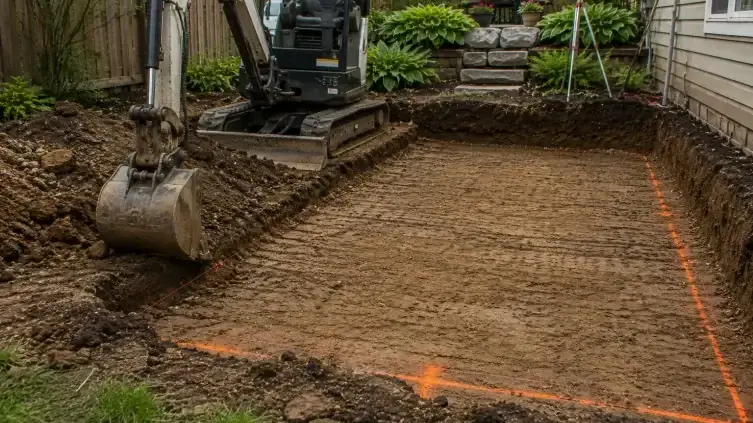
Patio excavation
Patio Excavation and Base Preparation for Paver Patios
Patio excavation that prepares the ground under a new patio: digging to the right depth, building a compacted stone base, and setting the grade and drainage so the patio stays level through Massachusetts winters, across Central Massachusetts, MetroWest, and Greater Boston.
- Free Estimates, No Obligation
- Insured
- Registered Massachusetts Corporation
- 4+ Years of Excavation Experience
- References Available
The scope
What Our Patio Excavation Includes
A patio is only as good as what is under it. Pavers or stone set on poorly prepared ground shift, sink, and heave after a winter or two. Patio excavation removes the soil that would move, replaces it with a compacted stone base, and sets the slope that sends water off the patio and away from the house.
- Layout of the patio area and its finished height
- Excavation of topsoil, roots, and soft soil under the patio
- A crushed stone base placed and compacted in layers
- A slight slope set away from the house for drainage
- Drainage preparation where water collects in the yard
Compacting crushed stone in layers is the same technique we use under basement floors and slabs on our foundation excavation jobs. If the yard itself is uneven or sends water toward the house, drainage grading comes first.
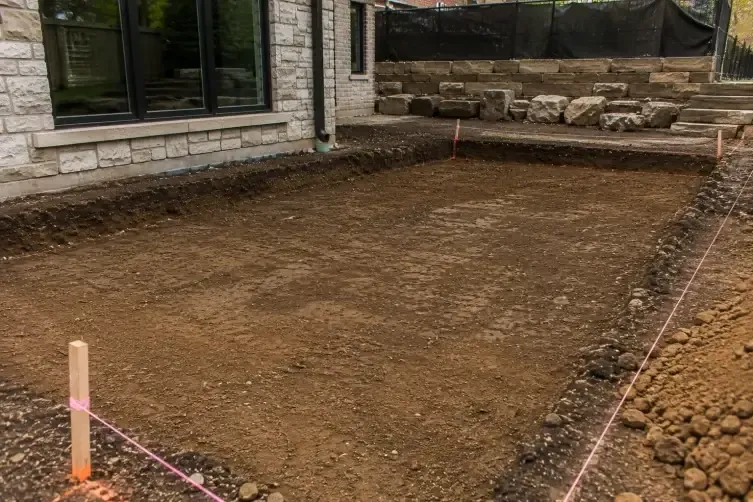
Five parts of the job
Patio Excavation Services We Provide
Every patio project starts with the same question: what is the ground under it like, and what will water do once the patio is there? These are the five services that make up our patio excavation work. Together they create a base that a patio installer, or you, can build on with confidence.
- 01
Patio Site Preparation
The patio area laid out, cleared, and set at the right height next to the house.
- 02
Paver Patio Preparation
The ground dug and prepared to the depth a paver patio base needs.
- 03
Base Excavation
Soft soil, roots, and topsoil removed so the base sits on firm ground.
- 04
Backyard Patio Excavation
Excavation in the yard, with access planned to protect the lawn.
- 05
Patio Drainage Preparation
A slope and, where needed, a drain so water leaves the patio.
What goes wrong
Why Patios Sink and Heave in New England
Most failed patios in Massachusetts fail from below. Topsoil and organic material left under the base keep settling. Water that cannot drain freezes in winter, expands, and pushes pavers up. A base that was too thin or never compacted moves under foot traffic. The surface is the last part to show the damage.
- Pavers that sink in low spots where water collects
- Stones pushed up after a hard freeze
- Edges that spread out and leave gaps between pavers
- Water that runs toward the house instead of away from it
- Weeds and cracks where the base has shifted
Each of these problems starts with excavation and base preparation. If an old concrete patio has to come out first, our demolition services include concrete removal, and the new base can be built right after.
Our process
How a Patio Excavation Project Runs
Patio excavation is usually a short project, but the order of the steps matters. We set the height and slope first, dig out everything that would move, build the base in compacted layers, and check the grade before the patio installer takes over. The yard around the work area is protected throughout.
- 1
Layout
We mark the patio, set its height next to the house, and plan the slope.
- 2
Excavate
Topsoil, roots, and soft soil are dug out to the planned depth.
- 3
Build the Base
Crushed stone is placed and compacted in layers.
- 4
Check and Hand Off
We check height and slope before the patio is installed.
The details that last
Base Depth, Slope, and Drainage Under the Patio
Three things decide how long a patio lasts: how deep the base goes, how well it is compacted, and where the water goes. The right depth depends on the soil, the patio, and its use, and the base should be compacted in layers rather than all at once, so it is firm from top to bottom.
The finished patio should slope slightly away from the house, so rain runs off the surface toward the yard instead of toward the foundation. Where a patio sits in a low part of the yard, or where the soil holds water, a drain under or beside the patio keeps water from sitting in the base and freezing. On a sloped yard, the patio area may need some grading or a small retaining edge to create a level space, which we plan with you during the site visit.
Access and protection
Getting a Backyard Ready for Equipment
Most patios are built in backyards, which means equipment and material have to pass a house, a fence, or a garden to get there. Planning the access route is as important as planning the patio, because it decides how much of the yard is disturbed and how much restoration is needed when the work is done.
- A gate or side yard wide enough for the equipment we plan to use
- A route that avoids septic systems, sprinklers, and wet spots
- Ground protection where equipment crosses a finished lawn
- A place to stockpile stone close to the patio area
- Fences, steps, or plantings that may need to be moved temporarily
We look at access during the site visit and talk through the options with you. When the route is tight, the plan may change how material is delivered or how the excavation is done, and the estimate states what part of the yard will need restoration afterward.
Before we start
Planning Your Patio Project
Patio excavation is easier to plan when we know the size, the material, and who will install the patio surface. Many homeowners hire a separate patio or hardscape installer, and we prepare the base to their requirements. Others come to us for the excavation and base first, and plan the surface later.
- The size and shape of the patio, and the door it connects to
- The patio material and the base the installer requires
- Access to the backyard for equipment
- Where water collects in the yard today
- Sprinkler lines, lighting wires, or other private lines in the area
Imperial Excavations and Constructions Corp is a registered Massachusetts corporation and carries general liability insurance and workers' compensation coverage. A certificate of insurance is available on request, and so are references from past customers, so you can check both before any equipment reaches the property.
Where we work
Patio Excavation in 88 Massachusetts Towns
We offer patio excavation in eighty-eight towns and cities across Central Massachusetts, MetroWest, and Greater Boston, in Worcester, Middlesex, and Norfolk Counties, working out of our base in Milford. Backyards in the region range from flat suburban lots to sloped yards, and each needs its own base and drainage plan.
- Acton
- Ashburnham
- Ashland
- Athol
- Auburn
- Avon
- Barre
- Bedford
- Bellingham
- Berlin
- Boylston
- Braintree
- Brookfield
- Brookline
- Canton
- Charlton
- Clinton
- Cohasset
- Dedham
- Douglas
- Dover
- Dudley
- East Brookfield
- Fitchburg
- Foxborough
- Framingham
- Franklin
- Gardner
- Grafton
- Harvard
- Holbrook
- Holden
- Holliston
- Hopedale
- Hopkinton
- Hubbardston
- Hudson
- Lancaster
- Leicester
- Leominster
- Lowell
- Lunenburg
- Medfield
- Medway
- Mendon
- Milford
- Millbury
- Millis
- Milton
- Natick
- Needham
- New Braintree
- Norfolk
- North Brookfield
- Northborough
- Northbridge
- Norwood
- Oakham
- Oxford
- Paxton
- Plainville
- Princeton
- Quincy
- Randolph
- Rutland
- Sharon
- Shrewsbury
- Southborough
- Southbridge
- Spencer
- Sterling
- Stoughton
- Sturbridge
- Sutton
- Uxbridge
- Waltham
- Warren
- Webster
- Wellesley
- West Boylston
- West Brookfield
- Westborough
- Westminster
- Westwood
- Weymouth
- Winchendon
- Worcester
- Wrentham
Free estimate
Get a Free Patio Excavation Estimate
Tell us the size of the patio you are planning and where it will go, and let us know if you already have an installer. We will look at the yard, the soil, and the drainage, and send a written estimate for the excavation and base, with no cost and no obligation to hire us.
- Free Estimates, No Obligation
- Insured
- Registered Massachusetts Corporation
- 4+ Years of Excavation Experience
- References Available
Prefer to talk? Call (508) 500-6598
FAQ
Patio Excavation Questions and Answers
These are the questions property owners and builders ask most often about patio excavation before they hire an excavation contractor in Central Massachusetts: base depth, compaction, drainage, old concrete, timing, and cost. If your question is not listed here, send it with your estimate request and we will answer it before any work is scheduled.
What is patio excavation?
Patio excavation is the digging and base preparation that comes before a patio is installed. It removes topsoil, roots, and soft soil from the patio area, replaces them with a crushed stone base compacted in layers, and sets the height and slope of the finished patio. It is the part of the project that decides whether the patio stays level for years.
What is included in your patio excavation service?
Our patio excavation service covers patio site preparation, paver patio preparation, base excavation, backyard patio excavation, and patio drainage preparation. That means layout, digging out unsuitable soil, building and compacting the stone base, and setting the slope for drainage. The estimate states the area, the depth, and the materials included.
How deep should a patio base be?
It depends on the soil, the type of patio, and the load it will carry. Patios for foot traffic need less depth than areas where vehicles might drive, and wet or clay soil calls for more. The installer's requirements and the product guidelines also play a part. We confirm the depth with you during the site visit.
Why do pavers sink or heave?
Pavers sink when the ground under them settles, usually because topsoil or soft soil was left in place or the base was not compacted. They heave when water trapped in the base freezes and expands in winter. Proper excavation, a compacted stone base, and good drainage prevent both problems, which is why the base matters more than the pavers.
Do you install the pavers too?
Our service is the excavation and base preparation. Many homeowners work with a separate patio or hardscape installer, and we prepare the base to that installer's requirements, so the surface can go in right after. If you do not have an installer yet, tell us during the estimate, and we will prepare the base for the patio material you plan to use.
Can you remove my old concrete patio first?
Yes. Old concrete patios and walkways can be broken out and removed as part of our demolition services, and the new patio base can be excavated and built right after, in the same project. Removing the old slab also lets us see the soil underneath and fix any problems before the new base goes in.
Does a patio need drainage?
Every patio needs a slope that sends water off the surface and away from the house. Many patios need nothing more. Patios in low spots, next to downspouts, or on soil that holds water may also need a drain beside or under the base, so water does not sit in the stone and freeze. We look at this during the site visit.
Can you build a patio area on a sloped yard?
Yes, with some grading. A sloped yard needs a level area for the patio, which can mean cutting into the slope, adding fill, or both, and sometimes a small retaining edge. The water coming down the slope also has to be managed. We look at the yard and suggest an approach that fits the space and your plans.
How long does patio excavation take?
Patio excavation is usually one of our shorter projects, but the time depends on the size of the patio, the soil, the depth of the base, access to the backyard, and the weather. Removing an old concrete patio adds time. The estimate includes a realistic schedule that fits your installer's start date.
How much does patio excavation cost?
The cost depends on the size of the patio, the depth of the base, the soil conditions, access to the backyard, the amount of material removed and brought in, and any drainage work. We visit the yard, measure the area, and send a free, no-obligation estimate that lists the excavation and base work.